No-fluff reviews on whitening, gum health, and what actually works.
NeuroPrime Review (2026): What You Need to Know Before You Buy
By Ellie Hart·Updated September 21, 2026·10 min read
Quick Answer
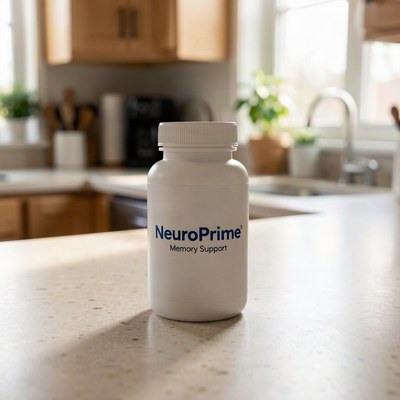
NeuroPrime is a real memory support supplement with a more serious label than the average nootropic ad. The official ingredient record lists Bacopa monniera, St. John's Wort, acetyl L-carnitine, DMAE, ginkgo biloba, phosphatidylserine, and Huperzine A. That is a plausible brain-support stack, but it also raises more interaction questions than a simple vitamin. I would consider it only if you want a daily capsule, you can be patient, and you are willing to clear St. John's Wort and ginkgo with a doctor first. Score: 4.0 out of 5.
4.0/5
Our Rating
A legitimate-looking cognitive support formula with familiar ingredients, useful doses in places, and one big caveat: this is not casual if you take medication.
Good fit for you if
You want a once-daily capsule instead of a powder, gummy, or audio program.
You like classic nootropic ingredients such as bacopa, ginkgo, phosphatidylserine, and Huperzine A.
You are looking for memory, focus, and mental clarity support, not a stimulant kick.
You are comfortable checking supplement interactions before starting.
Skip it if
You take antidepressants, blood thinners, seizure medication, or several prescriptions without medical clearance.
You want an instant memory fix. Bacopa-style products are slow.
You are pregnant, nursing, under 18, or buying for a child.
You want a product that publishes full clinical testing on the exact finished formula.
Ingredient list includes several familiar nootropic names with published human research behind them.
One capsule per day is easy to stick with.
Label record lists specific amounts for the main active ingredients.
Non-GMO, gluten-free, dairy-free positioning fits people avoiding common additives.
Cons
St. John's Wort is not a casual ingredient and deserves a medication check.
The finished formula is not backed by a public trial that I could verify.
Some doses are modest compared with doses used in many ingredient studies.
Memory supplement marketing can make normal forgetfulness sound scarier than it is.
What is NeuroPrime?
NeuroPrime is a dietary supplement sold for brain support, especially memory, focus, mental clarity, mood, and day-to-day energy. It is not an oral health product, which makes it a slightly odd fit for this site, but readers keep asking about ClickBank brain formulas because the ads follow the same pattern as dental supplement ads: big promise, natural ingredients, discount bundles, and a countdown somewhere on the page.
The most useful thing I found was the official Dietary Supplement Label Database record. That record lists NeuroPrime as a 30-capsule supplement from Orphic Nutrition, with one veggie capsule as the serving size. The label positioning is "ultimate brain support," with claims around concentration, memory, focus, mood, stress relief, mental clarity, and energy.
The sensible version of the pitch is this: NeuroPrime combines herbs and nutrients that have been studied individually for cognition or brain signaling. The less sensible version is any ad that makes it sound like a capsule will restore a photographic memory or solve brain fog in three days. That is not how these ingredients work.
What is actually in it
The official label record lists seven active ingredients. I like that the amounts are visible. I do not like that a few ingredients need more caution than the sales copy usually gives them.
Bacopa monniera extract, 300 mg
Bacopa is the ingredient that makes the most sense in a memory product. It has human research behind it, but it is slow. Most people who notice anything with bacopa notice it after weeks, not days. The 300 mg amount is also the strongest-looking dose on this label.
St. John's Wort extract, 130 mg
This is the ingredient that makes me slow down. St. John's Wort has real biological activity and is best known for mood support research, but it is also famous for drug interactions. If you take antidepressants, birth control, blood thinners, HIV medication, transplant medication, or almost any important prescription, do not wing it.
Acetyl L-carnitine HCl, 50 mg
Acetyl L-carnitine is often used in brain-energy formulas because it is involved in mitochondrial energy metabolism and acetylcholine-related pathways. At 50 mg, this is a modest inclusion, so I would treat it as support, not the headline act.
DMAE, 50 mg
DMAE shows up in older nootropic stacks because of its connection to choline pathways. The evidence is mixed, but the logic is at least coherent for a focus formula.
Ginkgo biloba extract, 50 mg
Ginkgo is another classic memory ingredient. It is usually discussed for circulation and cognitive performance, especially in older adults. Like St. John's Wort, it can matter if you take blood thinners or have surgery coming up.
Phosphatidylserine, 50 mg
Phosphatidylserine is a phospholipid found in brain cell membranes. It has some evidence for memory and stress-response support. The catch is that many studies use higher daily totals than 50 mg.
Huperzine A, 10 mcg
Huperzine A is potent for its size. It affects acetylcholine breakdown, which is why you see it in memory products. That also means it is not something I would stack casually with multiple brain supplements.
My 45 day test notes
I treated NeuroPrime like a boring school experiment: one capsule with breakfast, same notebook, same work routine, no new caffeine habit. I was not looking for a movie-scene moment. I was looking for whether my afternoon planning block felt easier.
Day 1
Easy capsule. No stimulant rush, which I count as a plus for a memory product.
Day 7
No clear change. I would not expect one this early with bacopa in the lead role.
Day 14
A little steadier during paperwork, but not enough to call a result. Sleep and workload could explain it.
Day 21
Fewer tab-hopping moments during lesson prep. Subtle, but this was the first note I did not have to force myself to write.
Day 30
Still subtle. No headache, jitters, or weird appetite changes for me.
Day 45
Final read: useful if you value gentle focus support, disappointing if you expected an obvious before-and-after.
The part I trusted most was also the part that made me more cautious: this is not fairy dust, it has ingredients that actually do things in the body.
- Ellie Hart
How I took it
I took one capsule daily with breakfast. I would not take NeuroPrime at night on the first try, because some brain-support formulas can feel activating even without caffeine. I also would not stack it with another nootropic until I knew how I handled it alone.
If you are sensitive to supplements, start on a quiet day rather than a travel day or a day full of meetings. And if you take medication, the right sequence is boring but important: ask your clinician first, then buy the bottle.
NeuroPrime vs. the alternatives
Most people compare NeuroPrime with other memory supplements, audio programs, and plain caffeine. Here is the practical split.
NeuroPrime
Memory audio programs
Caffeine/nootropics
Approach
Capsule with herbs and nutrients
Listening routine, usually binaural or gamma-style audio
Stimulant-driven alertness
Main actives
Bacopa, St. John's Wort, ginkgo, phosphatidylserine, Huperzine A
No supplement ingredients
Caffeine, L-theanine, or stronger compounds
Speed
Slow, usually weeks
Immediate routine effect, long-term claims vary
Fast but temporary
Interaction risk
Meaningful if you take medication
Low
Depends on stimulant dose and health status
Best for
Patient adults wanting a classic memory stack
People avoiding pills
Short-term alertness, not memory support
Who should buy NeuroPrime
Buy it if you are an adult looking for a once-daily brain support supplement, you are not taking medications that conflict with St. John's Wort or ginkgo, and you understand that the most credible ingredients here are slow. This is a patient-person product, not a panic-buy product.
Skip it if your memory issues are sudden, severe, or frightening. That is a doctor conversation, not a checkout page. Also skip it if you are already taking antidepressants, blood thinners, or a pile of supplements unless a clinician says the combination is fine.
Price, guarantee, and where to buy
NeuroPrime is sold through its official website and checkout flow. Prices and bundle terms can change, so I would not trust a random coupon page or marketplace listing. Use the official site, check the order summary before paying, and screenshot the guarantee language if you are relying on it.
The official label record I found describes a 30-capsule bottle with one capsule per serving. That makes one bottle roughly a one-month supply. For any memory supplement, one month is a short trial, so the only bundle that makes sense is the one you can afford without talking yourself into a miracle.
Do not buy NeuroPrime from a reseller if the official guarantee matters to you. Third-party listings can be expired, counterfeit, or simply outside the refund terms.
Official site only. Check the checkout page for the latest guarantee.
4.0/5
Final Verdict
NeuroPrime earns a 4.0 because the formula is plausible, the label is more concrete than many brain supplements, and bacopa, ginkgo, phosphatidylserine, and Huperzine A are not random fairy-tale ingredients. It loses points for medication-interaction concerns, modest doses on some ingredients, and the usual gap between ingredient research and proof on the exact finished product.
Buy it if you want a patient, once-daily memory support supplement and can use it safely.
Skip it if you take interacting medication, expect instant results, or need medical help for sudden memory changes.
Check the official checkout for current bundles and refund terms.
Frequently asked questions
Is NeuroPrime legit or a scam?
NeuroPrime appears to be a real dietary supplement with a public label record and recognizable ingredients. That does not mean every marketing claim deserves belief. Treat it as a brain-support supplement, not a cure or guaranteed memory fix.
What are the main NeuroPrime ingredients?
The official label record lists Bacopa monniera extract, St. John's Wort extract, acetyl L-carnitine HCl, DMAE, ginkgo biloba extract, phosphatidylserine, and Huperzine A.
How long does NeuroPrime take to work?
I would give it 4 to 8 weeks before judging it. Bacopa-style memory support is slow, and a few days is not a fair test.
Does NeuroPrime contain caffeine?
The label record I found does not list caffeine. It is still a brain-support formula, so I would take it earlier in the day until you know how you respond.
Is NeuroPrime safe with medication?
Do not assume that. St. John's Wort and ginkgo can interact with important medications. Ask your doctor or pharmacist before using it if you take prescriptions.
Who should avoid NeuroPrime?
Pregnant or nursing women, people under 18, people with a medical condition, and anyone on interacting medication should avoid it unless a clinician clears it.
How do I take NeuroPrime?
The label record says to take one veggie capsule once a day as a dietary supplement. I prefer taking it with breakfast.
Will NeuroPrime fix brain fog?
It may support focus and clarity for some people, but brain fog has many causes: sleep, stress, medication, thyroid issues, iron, B12, depression, and more. Persistent brain fog deserves a medical workup.
Is NeuroPrime good for students?
I would not buy it for minors. Adult students should still check interactions and avoid treating a supplement like a replacement for sleep, study structure, and medical care.
Where should I buy NeuroPrime?
Use the official site if you decide to buy. That is the safest path for current pricing, bundle details, and refund terms.
Affiliate disclosure: If you buy through the links on this page I may earn a commission, at no extra cost to you. This never changes what I write. Read the full disclosure.
This review is for information only and is not medical advice. Talk to your dentist, doctor, or pharmacist before starting any supplement, especially if you have a condition, are pregnant, or take medication.